
What Screen Time is Really Doing to Our Kids
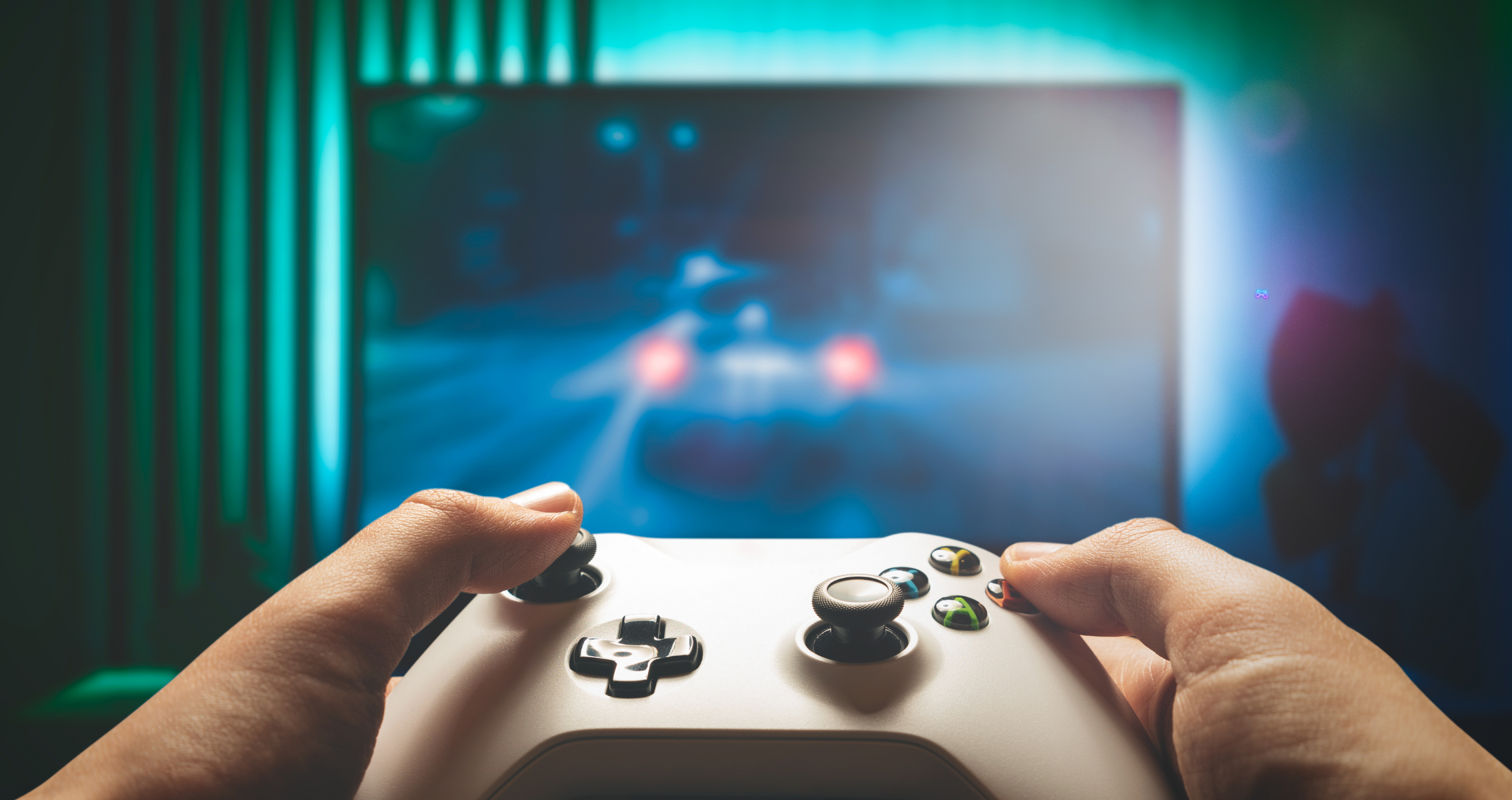
SCREENS. ARE. EVERYWHERE.
Phones, laptops, tablets, TVs, portable gaming devices, playroom toys with touch screens… I mean everywhere. The reality is, they’re inescapable for our kiddos. Which isn’t always a bad thing, certain educational apps and shows can be a great way for kids to learn.
But, proceed with caution.
The US Department of Health and Human Services estimates that American children spendseven hours per dayin front of electronics. You read that right, SEVEN HOURS. That’s more than the average American adult sleeps.
Let’s start with some research.
A study published in April of 2019 found that five-year-olds who spent two or more hours per day on a screen werefive timesmore likely to exhibit symptoms of ADHD as compared to their peers who were on screens for 30 minutes or less.
Another article published in the journalPaediatricsin August of 2019, found a similar link: researchers at the CHEO Research Institute recorded a positive correlation between increased screen time and poorer decision making skills and impulsivity in kids.
Sheri Madigan, the Canada Research Chair in Determinants of Child Development & professor of psychology at the University of Calgary, has studied and concluded that screen time can trigger aggressive behavior in kids.
Another research article found a correlation between amount of screen time and sleep – kids who spent more than two hours on screen time were 64% less likely to get the recommended age-appropriate amount of sleep compared to those who were on a screen for 30 minutes or less.
Too much screen time has also been linked to increased meltdowns, inability to sit still, emotional detachment, irritability, & oppositional or defiant behavior.
BUT, WHY?
It’s all about overstimulation. Phones and tablets normalize instant gratification, inundation of stimuli, and processing multiple actions simultaneously. The immediate satisfaction and exciting nature of screen time triggers the release of dopamine – our feel-good neurotransmitter. When this happens, we associate screens with pleasure and, therefore, something we want to spend more time doing. And while nearly all screen time is designed to grab our attention, some products (like video games) with their crazy realistic graphics and reward-based concepts, appeal much more to that dopamine rush. But when mama bear steps in to cut the game off, that dopamine release is also cut off – which can result in some of the behavioral symptoms mentioned above.
Between birth and the age of three, our brains develop rapidly and are particularly sensitive to the environment around us. The first few years of life are a critical part of laying the permanent foundation upon which all later brain function is built. In order for the brain’s neural networks to develop efficiently during this critical time, a child needs specific stimuli from the outside environment – an essential environmental stimuli that can’t be found on a screen.
Too much screen time during the early years can actually impede developmental abilities, particularly in terms of socialization and overall brain processing. Pretty much everything with a screen acts as an ultimate shortcut. Rather than having to take the time to process mama’s voice into words, visualize complete pictures, and exert mental effort to follow a storyline read from an actual book, kids who follow stories on smartphones are handed that information. The device does the thinkingforthe child.
LET’S TALK ABOUT SOCIALIZATION.
Our brain’s frontal lobe is responsible for analyzing and understanding social interactions. It allows us to practice empathy, read nonverbal cues others display, and learn how to observe other unspoken signs, such as facial expression and tone of voice, that are so crucial to real-world relationships. Proper development of the frontal lobe depends on authentic human interactions during early childhood (i.e. that same critical period mentioned above). If kiddos spend too much time in front of an iPad rather than being silly, playing, laughing, and engaging with others – their empathic abilities can be dulled.
Ultimately, time spent in front of a screen is also time our kids aren’t spending engaging with each other or in other activities. It increases the potential for missed opportunities and valuable interactions that shape and teach proper emotional regulation. Without those learned skills, our kiddos might become quicker to anger, easily frustrated, and withdrawn.
Signs your kiddo is getting too much screen time.
I mentioned some of the behavioral signs above, but we’ll recap and list some additional signs your babe might be getting too much screen time.
-
BEHAVIORAL SIGNS
-
Signs of overstimulation (aggression, lack of focus, irritability, meltdowns, emotionally withdrawn, oppositional or defiant behavior)
-
Throwing a tantrum when screens are turned off
-
Constant talk about screen time/devices
-
Boredom or inability to create self play outside of screen time
-
-
PHYSICAL SIGNS
-
Dilated eyes
-
Difficulty making eye contact
-
Vision problems
-
Eye strain
-
Poor sleeping habits or insomnia (i.e. ‘tired but wired’)
-
Headaches
-
Muscle pain
-
Digestive issues
-
Repetitive stress injuries
-
-
SOCIAL SIGNS
-
Poor interaction with others
-
More friends online than at school/in the neighborhood
-
Prefers screen time rather than face-to-face interaction
-
Trouble empathizing
-
Difficulty understanding nonverbal communication
-
Inability to interact with a diverse range of people
-
Alright so,what can we do?
SET BOUNDARIES.
The World Health Organization’s review of numerous studies on screen time led to the announcement of their own guidelines in April of 2019. Those guidelines include zero hours for kids under two and one hour or less for kids two to four. The Canadian Paediatric Society gives similar advice, with recommendations of one hour (maximum) for kids two to five and zero hours for those under two.
CREATE A FAMILY MEDIA PLAN.
In order to establish those boundaries, some experts recommend creating a family media plan, including where and when devices can be used. A few foundational rules should include no screens during meals or an hour before bedtime and to avoid having them on as consistent background noise.
TALK ABOUT IT.
Before screens or devices get turned on, talk to your kiddo (if old enough) to discuss exactly how long they’ll be able to stay on and what content they’ll be watching, listening to, or playing. If need be, you can set a timer as an ‘objective’ party- possibly giving a 5 minute warning for games that need some wrap-up time.
ENFORCE THE BOUNDARIES.
Consistency helps kids know exactly what to expect and reduces behavioral outbursts by eliminating any surprise factors.
CHOOSE VALUABLE CONTENT.
Kids imitate actions and words they’re exposed to on screens. In order to mitigate potential negative habits, be sure to choose their content appropriately. If you, as the parent, see or hear something that is unrealistic or doesn’t align with your family’s values – talk about it! There are tons of educational games and shows to choose from that can help develop coordination, hone quick reactions, and even sharpen language tools.
POWER OFF REGULARLY.
This means, outside of the designed screen time – no screens are on. If silence is too weird, turn some music on! This helps your kid understand the clear boundaries between the virtual world and the real one.
The main take home here is that kid’s brains areliterallybeing rewired by how much screen time they’re exposed to. We may laugh and find it adorable when a baby tries to ‘swipe’ a real photograph or push their fingers onto a book as if it’s touchscreen – but this points to something much deeper and more concerning. It points to the fact that the child’s brain has learned and internalized that all actions have an immediate effect and all stimuli elicit a quick response.
This may be true in the on-screen world, but real-life doesn’t have an on/off switch.
Copyright 2022 The Discovery Doc, LLC®. All Rights Reserved.
The Discovery Doc – Dr. CeCe Brooks – Atlanta Holistic NP